

Is Japan Rail Pass Worth Buying? (2025 Prices & Review)
Wondering whether the Japan Rail Pass is worth the money? This buying guide covers where you can use the JR Pass, how much value you’ll get on a normal trip to Tokyo and Kyoto, and answers to frequently asked questions about the unlimited train ticket. It also covers our many experiences purchasing the JR Pass and also not buying it. (Updated January 4, 2025.)
For starters, that last point–that we sometimes do not buy the Japan Rail Pass–is probably the most pertinent. We’ll be up front with you: just like every review of the JR Pass, this guide contains affiliate links for buying (discounted) Japan Rail Passes. Unlike many of them, this is not a thinly-veiled advertisement for the pass as a result.
Sure, we’d like you to buy the JR Pass using the links here and we think it makes sense for most visitors to Japan. But there’s no one size fits all advice, and we’re not going to pretend there is to make a few cents in commission. To that end, we’re also going to share our experiences with not buying the Japan Rail Pass, explaining how some of the more efficient travel itineraries is often accomplished without it.
Before we get to the nitty gritty of the review, we should probably start with basics. The Japan Rail Pass for foreigner visitors is an economical “all inclusive” pass on the JR rail lines available for purchase outside of Japan at a discount.
The JR Pass allows visitors unlimited travel for 7, 14, or 21 days via the JR lines. There are also two versions of the JR Pass: the more expensive Green pass, and less expensive Ordinary one (we always buy the latter—more on that below).

Here’s current 2025 pricing for the Japan Rail Pass, which will probably be valid for 2025 and 2026:
7-Day Japan Rail Pass
- Adult: 50,000 yen
- Child: 25,000 yen
- Adult: 70,000 (Green)
- Child: 35,000 (Green)
14-Day Japan Rail Pass
- Adult: 80,000 yen
- Child: 40,000 yen
- Adult: 110,000 yen (Green)
- Child: 55,000 yen (Green)
21-Day Japan Rail Pass
- Adult: 100,000 yen
- Child: 50,000 yen
- Adult: 140,000 yen (Green)
- Child: 70,000 yen (Green)

Here’s the previous pricing for the Japan Rail Pass that was valid from 1989 to 2023:
7-Day Japan Rail Pass
- Adult: 29,650 yen
- Child: 14,820 yen
- Adult: 39,600 yen (Green)
- Child: 19,800 yen (Green)
14-Day Japan Rail Pass
- Adult: 47,250 yen
- Child: 23,620 yen
- Adult: 64,120 yen (Green)
- Child: 32,600 yen (Green)
21-Day Japan Rail Pass
- Adult: 60,450 yen
- Child: 30,220 yen
- Adult: 83,390 yen (Green)
- Child: 41,690 yen (Green)

As you can see, JR introduced some truly massive price increases. The regular 7-day pass skyrocketed from JPY 29,650 to JPY 50,000, the 14-day pass increased from JPY 47,250 to JPY 80,000, and the 21-day pass went up the most “modest” amount, from JPY 60,450 to JPY 100,000. That last one is “only” a 65% increase, whereas the weeklong and two-week passes shoot up 70%.
Despite this massive price increase, the fastest Nozomi trains on the Tokaido/Sanyo Shinkansen and the Mizuho trains on the Sanyo/Kyushu Shinkansen still are not included in the base Japan Rail Pass. What is changing is that JR is offering an additional special ticket that can be purchased to upgrade to the Nozomi and Mizuho services.
As for the why of this, well, it’s arguably overdue. As noted above, prices had been flat on the JR Pass for decades–since 1989. In the time since, Japan has seen a massive influx of foreign tourists who purchase the JR Pass. The other big factors are undoubtedly inflation, weak yen and opportunism.
The yen is at historically weak numbers, hovering around the 150 level against the dollar. Since the Japan Rail Pass is purchased by foreign tourists, it thus makes sense to increase the prices on the pass while holding fares flat as those are paid predominantly by Japanese locals. Think of it as a form of price discrimination (not in the negative sense of the term, but the economic one).
Prices have not gone up for 2025 yet…and probably won’t. Once again, the previous price increase before this one occurred in 1989, so it’s not like raising the rates on the JR Pass is an annual thing. While we don’t expect several decades between the last and next price increase–especially if the yen remains weak–we do think it’ll likely be a few years before the next price increase. So pencil one in around 2030 or so.

There are several ways to purchase the Japan Rail Pass, with the most common being third party websites authorized to sell it. We recommend buying the discounted Japan Rail Pass from Klook, which also offers a wide variety of other discounted tickets (including to Universal Studios Japan).
Every authorized third party sells the JR Pass at the same price, and they’re all legitimate and have great customer reviews (at least, the authorized sellers). So there’s honestly not much of a reason to choose one site over another. Maybe you prefer the logo or color scheme of one over another, who knows. We typically use and recommend Klook because they’re more of a one-stop shop for a multitude of Japan tickets and experiences.
If you buy the JR Pass through one of these intermediaries, you’ll receive an Exchange Order rather than the actual JR Pass. The Exchange Order is essentially a voucher–it’s a physical document that cannot be emailed or faxed, only sent through the physical mail. It also cannot be replaced if lost.
In addition to the third party authorized sellers, JR now sells passes via the official website. Oddly enough, their prices are actually higher than via the third parties by 10-15%, so it doesn’t really behoove you to buy via the official site unless you’re purchasing at the last minute, as no exchange voucher is required to pick up your Japan Rail Pass at one of the ticket offices when buying directly from JR. Everyone else should stick to the authorized third party sellers.

The Japan Rail Pass is not currently available for purchase inside Japan at all major stations. This was previously being done as an extended test at international airports, as well as pretty much every big station connected to the Shinkansen (Shinjuku, Tokyo, Sapporo, Nagoya, Kyoto, Hiroshima, Yokohama, and many more).
However, that was discontinued. Our assumption is that this happened due to decreasing demand for the JR Pass following price increases, but that’s just a guess. Either way, you’ll need to buy the Japan Rail Pass online or from a travel agent in advance of your trip.
There have already been major improvements since we started using the Japan Rail Pass (more on those below) and we only expect that to continue. As Japan continues to modernize and streamline its approach to the JR Pass, our expectation is that the entire process is digitized in the coming years.

While there are other transportation companies that operate in Japan, the JR Group is by far the most common. They are the predominant rail group within Tokyo and Osaka, and also the main network connecting various cities to one another. Before our first visit to Japan, we read a ton about the Japan Rail Pass, consulting a lot of resources that overcomplicated the decision.
For most first-timers to Japan, whether the JR Pass is for you is quite a simple question to answer. It usually boils down to whether you’re traveling to another major city after going from Tokyo to Kyoto via the Shinkansen (bullet train). All Shinkansen in Japan are operated by the JR Group, meaning the entire network in Japan is covered with the pass.
In other words, you need to be taking at least three Shinkansen rides in a 7-day window. Keep in mind that this is just a rule of thumb, and operates under the assumption that you will continue to regularly use public transportation on in-between days. One example would be taking the Shinkansen from Tokyo to Kyoto, and then a roundtrip between Kyoto and Hiroshima, and then taking the train to Osaka and departing from Kansai International Airport–all within the span of a week.
It used to be the case that all you needed to justify the Japan Rail Pass was a roundtrip Shinkansen ride between Tokyo and Kyoto. That was it. Between that roundtrip on the Shinkansen trip and getting to and from the airport, you’d come out ahead by purchasing the Japan Rail Pass. Everything else was gravy. That is no longer the case due to the massive price increases.
If you’re only visiting Tokyo, do not buy the Japan Rail Pass. If you’re only visiting Kyoto, definitely do not buy the JR Pass. (There are some JR lines in Kyoto, but most are other companies.) Same goes for literally any single city trip to Japan. Even any trip to a single region in Japan does not necessitate purchase of the JR Pass. For those sticking to the Kansai (Osaka, Kyoto, Nara, etc.) or Kanto (Tokyo, Yokohama, etc.) regions, the Japan Rail Pass is almost certainly not for you.
Basically, if you won’t be using the Shinkansen at least 3 times, the question ends there. Do NOT buy the JR Pass. Pretty simple and straightforward, right? It’s almost impossible to justify the Japan Rail Pass from a cost perspective if you are not venturing beyond Tokyo. Unless you intend upon spending the entire day riding the JR lines around (not a bad way to spend a day!), there’s little chance that the Japan Rail Pass will pay for itself over the course of a single-city or regional trip.

As of 2025, the Japan Rail Pass really only works with a multiple Shinkansen scenario. If you’re going from region to region, using the bullet train to get around. With that said, it can make sense going from Tokyo to Kyoto, and then making day trips from there.
In this scenario, we use Kyoto as a home base and take a variety of day trips throughout the Kansai region to Kobe, Himeji, Nara, and elsewhere. For us, these day trips–and the flexibility and convenience offered by the JR Pass–are the tipping point. We’ve done spontaneous day trips to Kanazawa, Hikone, Uji, and a number of other cities and spots.
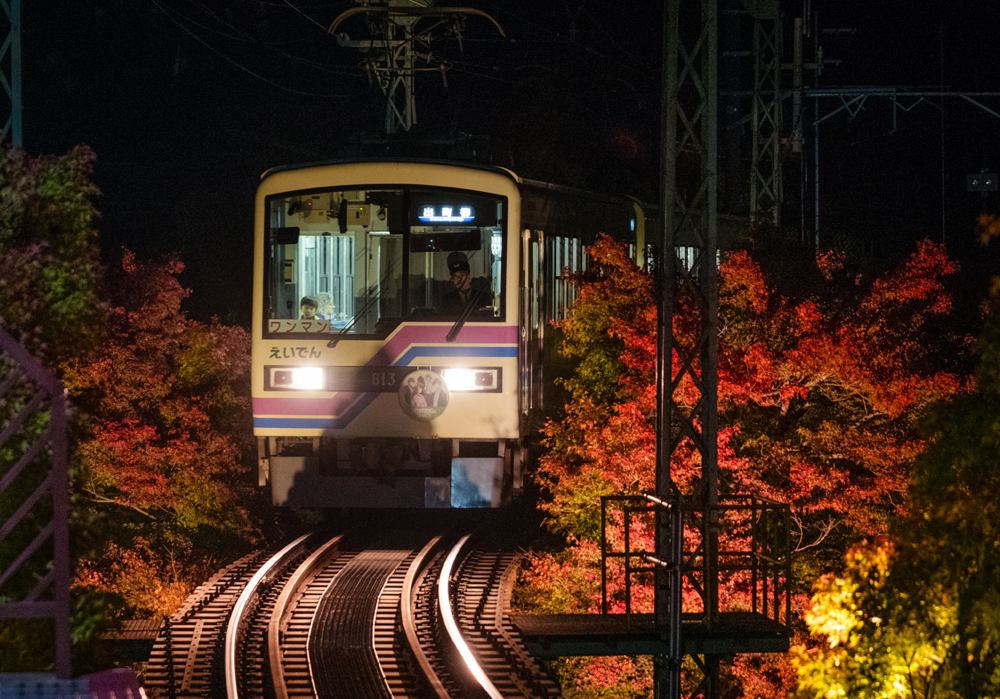
We’ve used the JR Pass to visit nighttime illuminations during fall colors and sakura seasons, as well as other special events in far-flung locales, using the long train rides to get work done on multi-month trips. We never would’ve visited these places or had these experiences if paying out of pocket for additional Shinkansen tickets.

The thing is, we’re undoubtedly unique in that regard. Most visitors to Japan–especially ones asking “is the Japan Rail Pass worth the money?”–are not taking spontaneous day trips. More likely, it’s your first visit to Japan and you are, understandably, going to stick to the script and see the highlights around Tokyo and Kyoto.
Nevertheless, you might be considering flying into one of the cities and out of the other. This is especially true for those taking a trip to Japan lasting 10 or fewer days, as the open-jaw route is more efficient and gives you more time to spend in both Kyoto and Tokyo. To that point, if you only have 7-10 days in Japan, you may not have extra time for day trips…and thus not need the JR Pass.

If you do have more than 10 days, or are just planning a whirlwind trip to Japan that’ll take you to as many different places as possible, the JR Pass can be worth it. From Kyoto or Osaka, it’s pretty easy to do a ton of different day trips within the Kansai region, which would be pricey Shinkansen rides without the Japan Rail Pass. If you’re thinking about adding days in the aforementioned cities–or even Hiroshima, Nagoya, or Yokohama–it becomes a very close call even with only doing a one-way Shinkansen trip.
In our view, day trips in that scenario are what tip the scales in favor of buying the JR Pass. If you plan on doing a few of those, it can make sense to purchase the pass. Even if you can’t quite see that in the math ahead of time, it will often come “close enough” to working out.
You’ll end up taking the train more than you otherwise anticipate for shorter commutes, and it’ll work out in the end. That coupled with convenience and pre-planning makes the pass make sense. Just be warned that you might lose money with the Japan Rail Pass and certainly won’t save as much in 2025 as the halcyon days the last 3 decades when the JR Pass cost about as much as two Shinkansen rides.

The case could be made in favor of the Japan Rail Pass from the perspective of convenience, but it would not be an even remotely compelling argument. It’s definitely easier to use the pass as you walk through the stations rather than calculating the cost of each route, buying an individual ticket, invariably purchasing the wrong one, and having to go to the adjustment counter.
However, the solution to that problem is not buying the Japan Rail Pass. It’s buying an IC card (like Suica, PASMO, or Icoca), filling it with yen, and just tapping that at the automatic gates as you go. It avoids all of the inconveniences you’ll encounter with individual tickets, and also means you’re not overpaying (like you would if you buy the Japan Rail Pass and only visit Tokyo).

The additional upside of the PASMO card is that it’s nearly universal, meaning you can use it on lines that are not operated by the JR Group. We typically use the PASMO card in tandem with the Japan Rail Pass. (Just be mindful of not using the PASMO card by accident in places that accept the JR Pass!)
This is especially true when traveling within Kyoto, as many of the rail (and all of the bus) lines in Kyoto are not operated by the JR Group. For practical purposes, this is the most notable instance of non-JR lines you’ll probably encounter in Japan, although we encounter non-JR lines from time to time in other places, as well.
This is truer than ever now that IC cards can be loaded into digital wallets and used on your iPhone or other smart device. You can reload this with your credit card, and do so before even leaving home when the conversion rates are most favorable. IC cards can be used at train stations, restaurants, retailers, and even certain vending machines.

Speaking of recent developments, the JR Pass is now automated! It now looks just like a regular train ticket, and can be used at automatic ticket gates to enter and exit railway stations. This is a huge and overdue upgrade.
Previously, you had to pass through the staffed gate and present the Japan Rail Pass to an employee who waved you through. That had become more tedious in recent years as tourism to Japan exploded, as there were often backups at these manned gates with confused foreigners asking questions, fare adjustments, and more. The automatic tickets cut down on a lot of waiting, and–at least for us–the occasional missed train as a result.
Our sincere hope is that the next step is an entirely digital Japan Rail Pass. Logically, it seems like you could purchase the Japan Rail Pass online, activate and set the start date yourself, and use it via Apple Wallet (etc.) just like an IC card. Given how long it took Japan just to advance past the handwritten paper pass, that’s probably still years away, but I can dream.

For now, the Japan Rail Pass voucher can be purchased online or through travel agents outside of Japan and still must be exchanged in person. As noted above, what you receive when purchasing is only a voucher, which then must be exchanged at offices in major JR stations. Again, these offices include those at Narita Airport and Kansai Airport.
If it’s your first time in Japan, we highly recommend making the exchange at the airport, as this is the easiest location. Even if you don’t plan on using the Japan Rail Pass right away (you should time its start date strategically to encompass all of your Shinkansen rides), that’s fine. You can specify a start date in the future.
The upside of redeeming at the airport is that the JR office is far easier to find, and more convenient. On our first visit to Japan, we did not follow this advice. We waited until going to Tokyo Station (an overwhelming labyrinth the first time you experience it) to redeem our passes, and we just about had a meltdown trying to find the office.

At the office, a representative takes your voucher, reviews your passport (for the appropriate “temporary visitor” status stamp), and provides you with the pass, which is then to be presented to the window at JR gates (where they wave you through) with your passport.
The distinctions between the Green and Ordinary versions of the Japan Rail Pass mostly relate to the Shinkansen. With the Green version, you’re able to board the Green car on the Shinkansen (and some limited express trains). Think of this as First or Business Class on an airline—larger seats and slightly more spacious.
We have never purchased the Green Pass, and never will. We purchase the JR Pass to save money, so that defeats its purpose for us. The “ordinary” cars on the Shinkansen are more than sufficient–they offer much more legroom and space than flying coach on an airline. Your mileage may vary on this, but we see this as a slight upgrade in the experience for a massive premium in pricing.

Ultimately, the math on the Japan Rail Pass is far less favorable as of 2025 than it was from 1989 until 2023. Previously, we advised that most of you who are researching this question are going to want to buy the Japan Rail Pass. Now, we think that a small minority of you will probably want to purchase it–maybe 25% or less.
We still think that making the trek from Tokyo to Kyoto and beyond (and possibly back!) is well worth your time and money, and riding a state of the art bullet train is an experience in itself. The problem is that doing all of this in the span of only 7-days is going to be very difficult, so you’ll either want or need a longer pass for those 3+ Shinkansen trips–and thus pay more and have a higher breakeven point–or won’t be traveling to as many cities.
With that said, it can be done–even today! We’ve used the JR Pass to travel from Tokyo to Hiroshima, with stops at Nagoya, Kobe, Himeji, and Hikone along the way, before ending up in Kyoto all within the span of 7-days–and probably got double the current value of the pass in the process. However, that required a ton of strategic pre-planning and the results are not going to be replicable for most tourists. Basically, unless you’re doing a whirlwind trip across Japan on the Shinkansen, the Japan Rail Pass probably no longer makes sense.
If you’re planning a trip to the Japan, check out our other posts about Japan for ideas on other things to do! We also recommend consulting our Ultimate Guide to Kyoto and Ultimate Guide to Tokyo to plan.
Your Thoughts
Have any questions about using the Japan Rail Pass that we didn’t cover? Have you used the Japan Rail Pass in the past? Any thoughts or additional tips based upon your experience? Please share your thoughts or questions in the comments below!





Trackbacks & Pingbacks
-
Japan Rail Pass wart w 2025: przewodnik dla początkujących, jak zdecydować z pewnością - Cartography: The Science and Art of Map Making | worldmaps.info says:
September 21, 2026 at 10:05 pm
-
Japan Rail Pass layak 2025: panduan pemula untuk memutuskan dengan percaya diri - Cartography: The Science and Art of Map Making | worldmaps.info says:
September 21, 2026 at 7:54 pm
-
Japan Rail Pass vale a pena em 2025: o guia para iniciantes decidirem com confiança - Cartography: The Science and Art of Map Making | worldmaps.info says:
September 21, 2026 at 7:39 pm
-
101 Great Tokyo Disneyland & DisneySea Tips – TapTapFly.net says:
July 14, 2026 at 6:45 pm
-
Japan Rail Pass vale la pena 2025: la guía para principiantes para decidir con confianza - Cartography: The Science and Art of Map Making | worldmaps.info says:
July 13, 2026 at 6:08 pm
-
Japan Rail Pass en vaut-il la peine en 2025 : le guide du débutant pour décider en toute confiance - Cartography: The Science and Art of Map Making | worldmaps.info says:
July 13, 2026 at 6:06 pm
« Older Comments[…] dni i 100 000 jenów za 21 dni; klasa Green kosztuje odpowiednio 70 000, 110 000 i 140 000 jenów (szczegóły cen na 2025). Ten zakres cen przesuwa kartę w obszar „najpierw oblicz”, zamiast „kup i […]
[…] dan 100.000 yen untuk 21 hari; kelas Green berharga 70.000, 110.000, dan 140.000 yen masing-masing (rincian harga 2025). Rentang ini mendorong pass ke wilayah “harus dihitung dulu” daripada “beli dan […]
[…] e 100.000 ienes por 21 dias; a classe Green custa 70.000, 110.000 e 140.000 ienes respectivamente (detalhamento dos preços de 2025). Essa faixa empurra o passe para o território de “deve calcular primeiro” em vez de […]
[…] so time your activation date to coincide with your days exploring Tokyo and Kyoto. Read our “Should You Buy the Japan Rail Pass?” post to determine whether it’s right for […]
[…] 100,000 yenes por 21 días; la clase Green cuesta 70,000, 110,000 y 140,000 yenes respectivamente (desglose de precios 2025). Ese rango empuja al pase al territorio de “debe calcularse primero” en lugar de “comprar y […]
[…] 100 000 yens pour 21 jours ; la classe Green coûte respectivement 70 000, 110 000 et 140 000 yens (détail des tarifs 2025). Cette gamme pousse le pass dans une catégorie où il faut « calculer d’abord » plutôt que […]
Leave a Reply
Want to join the discussion?Feel free to contribute!