

Is Japan Open to Tourists?
Is Japan open for international individual travelers? Are borders open as normal in 2024? What are testing, face mask, and vaccine requirements for visitors? These are questions among those planning trips to Tokyo, Kyoto, Osaka, and this covers the answers.
The good news is that we now have an answer to questions we’ve been asking for nearly two years! First, after reopening to guided tour groups, Japan reopened to individual tourists on October 11, 2022. In the year-plus since, additional changes have occurred to the extent that it’s basically business as usual for visiting Japan in 2024.
We’ve already returned to Japan, spending about a month in Tokyo, Kyoto, Osaka, and elsewhere. In various updates here, we’ve been sharing our experiences and what it’s like as a foreign visitor, what has changed, crowd conditions, expenses of visiting Japan with the weaker yen, and much more. The big one for most of you is likely going to be Japan Face Mask Rules v. Reality in 2024.
Those two posts cover essentially everything you need to know about visiting Japan as of 2024. The short version is that it is possible to enter, regardless of whether you’re vaccinated or unvaccinated, albeit with a testing requirement for the latter. There are no quarantine requirements, and travel is visa-free for the vast majority of people reading this.
Please subscribe to our FREE email newsletter and stay tuned if you are curious about how things are on-the-ground for tourists in Japan post-reopening.

In terms of the latest news, the current vaccine and testing policies ended on May 8, 2023. This is because Japan has formally decided to downgrade the legal status of the novel coronavirus on May 8, 2023 to the same category as common infectious diseases, such as seasonal influenza, thereby easing COVID-19 prevention rules.
This is a major policy shift and will relax–if not eliminate entirely–Japan’s intensive COVID-19 countermeasures, including limiting the movements of infected people and their close contacts. Japan’s reclassification of COVID-19 to Class 5 came after a panel of experts under the health ministry agreed on the plan earlier in the day.
The downgrade would pave the way for a normalization of social and economic activities in Japan, and should mean that non-residents are able to enter the country without PCR tests or additional paperwork. Essentially, there will be no (legal) basis for the current border protocol effective May 8, 2023. Of course, things could change between now and then, but it’s likely the border will revert to late 2019 status as of that date.

We typically spend a couple of months in Japan each year, and are ecstatic to be returning after nearly 3 years away. We are eager to revisit our favorite places, see friends in Japan for the first time in over two years, and continue creating this site’s wealth of free planning resources. We’re excited about this great (but overdue) news, but also go in knowing that things will be different, in ways both good and bad.
For these two-plus years, we’ve been closely monitoring the situation in Japan, watching several hours of NHK each day and reading multiple Japanese news sources. All of this in the hope for some clarity as to when the country will fully reopen and Japan will begin allowing international tourists to enter once again.
What follows is based on that research and fixation with the on-the-ground situation in Japan. We’re preserving this for posterity, but everything that follows is now (thankfully!) obsolete information.

Japan is now allowing foreign nationals to enter Japan for purposes other than tourism so long as they have a sponsor in the country. This includes business travelers on short stays, students in study abroad programs, participants in technical internships, both guided & unguided tour groups, spouses or children (and other relatives) of a Japanese national/permanent resident, others with special exceptional circumstances, and those who would provide a “public benefit” to Japan.
With that in mind, let’s cover how we got here, why Japan maintains the strictest among the Group of Seven developed nations, and what could cause that to change…
Again and again, Prime Minister Fumio Kishida has said that Japan “will continue to consider how the measures should be by taking into account the infection situations at home and abroad, border control measures taken by other nations, and progress in the rollout of vaccine boosters.”
Kishida has also acknowledged that Japan’s border control measures are the strictest among Group of Seven nations, and expressed a desire/need to bring Japan in line with its counterparts. “This is the first step in our gradual easing of the [border] restrictions,” Kishida has said.

As for why Japan’s border is still closed over a year after most democracies reopened, that can largely be explained by the country’s apprehensiveness of outsiders.
For better or worse, Japan is an insular and culturally conservative country–a characteristic that is often valued by visitors. Not so much in the last couple of years, as this has been reflected in policy-making. Japan has vilified and scapegoated foreigners and had an overly aggressive approach to its borders.
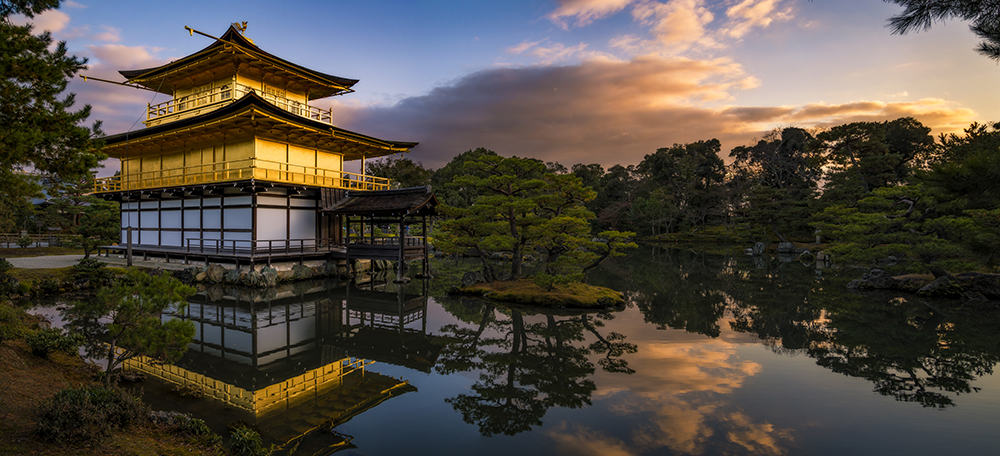
Due to this and other policies, Japan has lagged behind economically, seeing slower recovery than the United States and other counterparts that have more aggressively reopened. Economic benefits of international tourists is one big reason why Japan is expected to reopen its border.
Boosting tourism was core to the late former Prime Minister Abe’s economic revitalization, and both subsequent prime ministers have indicated their intentions to maintain continuity with those plans. However, the number of foreign visitors to Japan dropped to 245,900 last year, the lowest since 1964, as the country enforced tighter border controls. Compared with the pre-pandemic level in 2019, it dropped 99.2 percent. That’s the sharpest fall on record according to the Japan Tourism Agency.

Economists fear a “double dip” recession in Japan due to the prolonged closures and restrictions. Decreased tourism plus falling exports, an increased consumption tax, reduced consumer spending, weak yen, and growing national debt. Japan’s economy has serious issues and inbound tourism was previously a bright spot.
In other words, reopening to international visitors will be important to the health of Japan’s consumption-driven economy at some point in the not too distant future. This becomes increasingly true as the yen weakens due to the Bank of Japan continuing to pursue its loose monetary policy while the United States Federal Reserve, European, and other central banks raise interest rates. Quite simply, Japan is inflicting pain on itself by remaining closed.
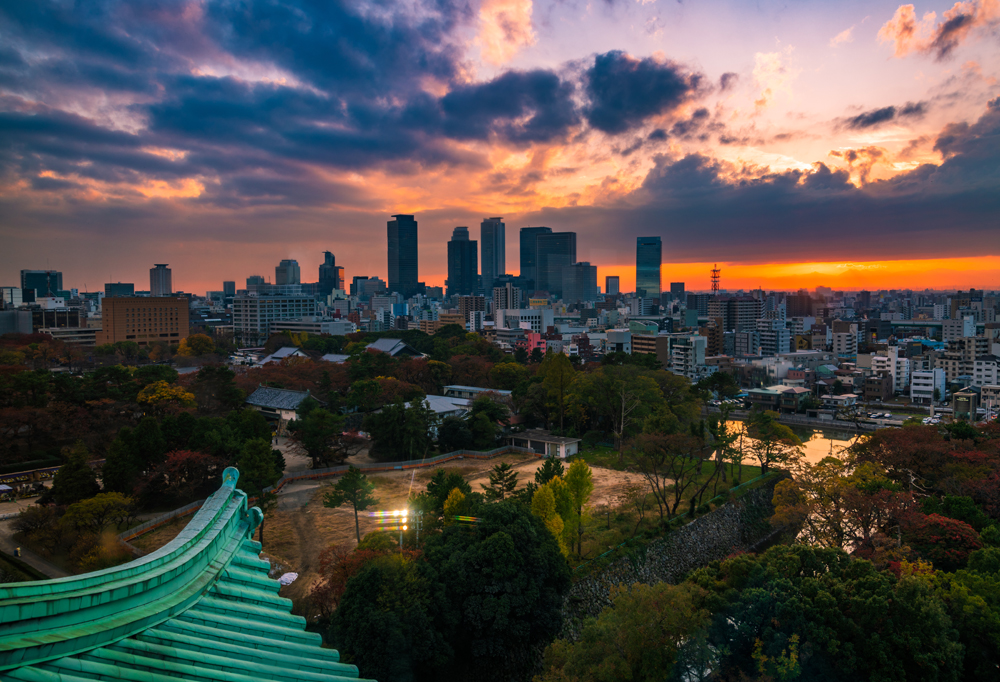
There are also signs that stringent travel measures, including the border closure, are having a greater impact on Japan’s economy than previously believed. This is despite Japan’s “Go to Travel” campaign that subsidized domestic travel, which was offered at various times during the last two years.
According to data from the Japan Tourism Agency, stays at hotels and other accommodation facilities hit another record low in Japan last year–breaking the previous record set in 2020. The total of guests at hotels and inns was 315.75 million, down 4.8% from 2020 and 47% from 2019. (This number includes hotels used as government quarantine facilities, not just leisure stays.)

The ruling coalition of the Liberal Democratic Party recognizes these problems and realizes it needs to rebuild Japan’s economy. Prime Minister Fumio Kishida stated that his top priority was formulating new economic measures and implementing these goals. The government will also take measures to stimulate and jump-start the economy.
Despite the aforementioned numbers, Japan is maintaining its goal of attracting 60 million foreign visitors by 2030. Additionally, the Japan National Tourism Organization has set 2024 as its goal for recovering to 2019 international travel levels. Both of these statements are reassuring given the current border closures, and indicate that Japan will unwind its travel ban in months, not years.
Against that economic backdrop, let’s take a look at the latest changes to Japan’s reopening plans…

We have more good news! Multiple media outlets, including NHK, Kyodo, Nikkei, and Fuji TV are all reporting that Japan’s government is planning to further relax restrictions and border measures with an eye to implementing the revisions by the start of October.
The specifics are not consistent among outlets, so let’s start with where they’re in agreeance.

First, there is consensus that the daily arrival cap, which is currently set at 50,000, will be eliminated entirely.
This is a necessary prerequisite for further reopening and the resumption of more inbound international flights, but this alone was not an obstacle dissuading most international visitors. While the daily number of arrivals was higher pre-closure, we assumed that 50,000 is the level at which this cap becomes immaterial with China still sidelined. Regardless, it’s good to have this removed as it eliminates an element of uncertainty and could have been an issue during peak travel times for the Japanese.

Another possibility is that Japan will allow individual foreign tourists to enter the country and exempt them from visas if they have been vaccinated three times or submit a pre-arrival test result.
This is where there is disagreement among the major outlets. Kyodo, Nikkei, and NHK are reporting that this is to be determined, with government officials still deciding whether to proceed with this plan or start with lifting the daily arrival cap. By contrast, Fuji TV is treating this as a done deal, using less ambiguous language.
Prime Minister Fumio Kishida reportedly plans to make a decision as early as the end of this week, according to the news outlets’ sources.

These “leaks” came after Deputy Chief Cabinet Secretary Seiji Kihara spoke on Fuji TV over the weekend and stated that Japan will consider easing all three restrictions–the daily arrival cap, ban on individual tourists, and visa requirements. “We will review all three restrictions together. We have to carry it out in the not-so-distant future,” he said.
“Japan has seasonal attractions in fall and winter. We know there are a lot of people overseas who want to come to Japan,” Kihara added. “Amid the weakening yen, inbound travelers will have greatest economic effect…There are many foreign visitors who want to come visit Japan.” Kihara added that eliminating the arrival cap alone was not enough.

Kihara isn’t the only one who has been vocal about fully reopening to tourists recently. During the Bloomberg New Voices panel, Tokyo Governor Yuriko Koike said she would open the country’s doors “tomorrow” if it were her decision. “Tourism is a big industry in Tokyo, as well as in all Japan, so this is the time to greet more foreign tourists by using this advantage of the depreciation of the yen,” she said.
Koike said that Japan’s borders would fully reopen soon. “The national border is under the management of central government,” Koike said. “As governor of Tokyo, that would be tomorrow.”

The yen has fallen to a 24-year low of ¥144 to the dollar, likely contributing to the sense of urgency in the aforementioned interviews.
Japan eased its border restrictions last week, raising the daily arrival cap from 20,000 to 50,000 and dropping the requirement for pre-arrival PCR testing for vaccinated travelers.

Japan also began allowing unguided tours, meaning ones not accompanied by tour conductors. This is specifically for “unguided tour groups” or “non-escorted visitors on package tours” and not individual tourists.
In Unguided Tours in Japan – Reopening Phase Rules, we cover what this entails and the recently-released guidelines and FAQ for these tours. Prior to those guidelines being released, we speculated on how this would work given basic logic and past precedent with prior groups who had been allowed to enter Japan. We were wrong–the unguided tours offered two steps forward but one step backwards.

We mention this in part to own past mistakes, but also as a cautionary tale. While it certainly sounds like the end is near for the Japan travel ban, it’s premature to have a high degree of confidence.
Kishida’s government has been trying to take advantage of the weak yen and accelerate growth by attracting more foreign visitors. It thus stands to reason that opening to individual tourists necessarily needs to occur–that raising the entry cap will do nothing in furtherance of their stated goal. However, as we have seen time and time again, the patently obvious conclusion often is not the outcome reached by Japan.

Moreover, how this played out with Japan’s last announcement is also instructive.
On August 23, specifics of the September relaxation measures were leaked to the same media outlets. At that time, it was unclear whether unguided tourists would be allowed to enter. On August 31, Kishida made an official announcement encompassing all of the rumored changes, including unguided tourists. (It took a few more days for the guidelines to be released, and the clarifying FAQ is still being updated.)

While presenting the above as a cautionary tale against optimism or over reliance on logic when assessing Japan’s decisions, that’s exactly what I’m going to do. (I’m sorry, I can’t help myself. Like a moth to a flame.)
First, there’s already the realization that unguided tours–like guided tours before them–will not move the needle on inbound tourism in any meaningful way. It’s another symbolic measure, and coming at a time when an increasing number of international visitors have already moved on to other destinations and pent-up demand has begun fizzling out. The number of people anxiously awaiting Japan’s reopening is shrinking, not growing.

Second, there’s awareness within the Kishida administration that the window of opportunity to reopen the border is closing. This is something we’ve pointed out in our best and worst case scenarios in prior updates, but there’s only a limited amount of time between waves.
Over two years into this, the seasonality of COVID transmission is well-established. Cases are currently in freefall and will continue decreasing next month before bottoming out sometime between late October and early November. There will be a winter resurgence. It could start as soon as late November, but is more likely in December.
Reopening to individual tourists in October presents minimal (political) risk and maximum (economic) upside. Public opinion polls show that most voters have already moved on from COVID to assorted scandals; the minority who still care will see no immediate increase in cases correlating with the border reopening.

Frankly, the miscalculation here by the Kishida administration is thinking that this will have an immediate impact on inbound travel. Those reading regular updates on Japan’s reopening are not representative of international travelers at large. Most people need months of time between booking and traveling; very few plan and take last-minute trips–especially international ones.
Obviously, the easing has to occur at some point and this lag will always play out, but the notion that this moves the needle for fall is misguided. Autumn is already a lost cause. At best, this helps with winter. More likely, the impact won’t be fully felt until next year’s cherry blossom season.

One wildcard is the downgrade of COVID’s legal status. Several recent updates have centered around Japan’s internal debate over whether to strip COVID-19 of its special status and downgrade it to the same level as the flu in Japan’s infectious disease categories.
It’s been our perspective that this was a necessary prerequisite to welcoming individual tourists as there would no longer be a need for a responsible receiving party to monitor travelers and act as a liaison for infected individuals. Given that none of the recent reports have even mentioned COVID’s status in regard to reopening, it’s possible our perspective was wrong. Or, that this barrier does still exist and Japan will have to create a “solution” for it (travel insurance?) for individual tourists. Either way, that’s something to continue keeping in mind.

Also as previously mentioned, recent poll data also shows the public is now far less concerned with COVID than the economy, Unification Church scandal, Abe’s state funeral, and other issues. It’s entirely possible that Kishida sees this polling and his sagging approval numbers and realizes that it’s time to move forward. That there’s more upside than downside risk in reopening and encouraging more economic activity.
As we’ve stressed repeatedly, Japan’s populace has been among the most cautious in the world with regard to COVID-19. Human behavior and sentiment don’t change overnight, even if it’s economically advantageous and objectively safer to do so. Statements by politicians and medical advisors, gradual border relaxation measures, and other changes could be interpreted as Japan laying the groundwork for a resumption of normalcy and the country’s eventual reopening. It now appears that the time is here–or coming very soon.
With all of this said, I’ll present my revised best, worst, and base-case scenarios for Japan’s reopening to individual tourists…

Let’s start with the best-case scenario. This assumes that Japan downgrades COVID-19 from its special status to Category 5 literally any day now or that this is not a necessary prerequisite to an individual tourist reopening. (With the possible workaround of travel insurance or some other awkward “fix.”)
Critically, this would eliminate the legal requirement of a responsible receiving party for visitors to Japan. In such a scenario, the borders could almost immediately return to their normal pre-closure status in early October. With this, the visa exemption would be reinstated, making that a non-issue. The arrivals cap would also be eliminated in this scenario.

Then there’s the middle ground or base case. This is now the same as the best-case scenario. In short, the early October reopening is not just our most optimistic view–it’s now what we expect to happen.
To differentiate the two, I’ll also allow for a middle ground possibility of a bifurcated decision with the individual tourist reopening a few weeks after the entry cap elimination. Let’s say that happens in early November.
This is would allow a bit of wiggle room for Japan’s slow and belabored decision-making process that involves a lot of “careful consideration” and “evaluating the situation.” If anything has been well-established during the last two-plus years, it’s that inaction is Japan’s baseline, and anything that does happen occurs gradually and in stages.

Finally, the worst-case scenario is that Japan instead opts to revive its “Go to Travel” campaign just in time for fall colors season, and uses that to buoy the tourism sector through December. It’s possible the country views this as sufficient for tourism businesses to stave off bankruptcy or other financial hardship for another few months.
If/when there’s another winter resurgence in cases, the reopening can would effectively be kicked down the road for a few more months. That would mean individual tourists would not be welcomed back to Japan until sometime in the first half of 2023. I’m inclined to say Spring 2023, but it’s easy to envision a worst-case that isn’t until summer.
Our view is that the worst-case scenario is now highly unlikely. Japan relaxed its border measures earlier in September while still being #1 in the world for new cases. This indicates that Japan is finally ready to move forward and sets the precedent for future changes during waves. Who knows–it still may take until early 2023 to fully downgrade the legal status of COVID. But whatever winter wave occurs (and one will happen), that’s unlikely to be an obstacle to reopening progress, as was the case last year.

With all of that in mind, we remain cautiously optimistic that individual tourists will be allowed to enter Japan sooner rather than later. The political and economic appetite for fully relaxation now clearly exists, and there’s a vocal chorus of politicians in Japan–including those who were previously in favor of closed borders–championing reopening. It’s now the popular position being advanced publicly by politicians, not just being advocated by Keidanren or Japan’s business lobby.
Japan fully reopening in full is all but inevitable at this point. It will happen soon. The end is near.

It’s thus our view that Japan reopening in some capacity to individual tourists in October is a very realistic scenario. As improbable as it might’ve seemed even a week ago, Japan welcoming back international visitors who are not part of tours (guided or unguided) sometime before November is likely. It’s pretty clear the government is focused on moving forward. As frustrating as this whole process has been, Japan is not still (completely) stuck in March 2020.
As always, Japan is cautious and conservative, with a slow and belabored decision-making process that often embodies “analysis paralysis” and usually defies logic. That’s a wild card that could further extend any timeline. However, Japan is now joining the rest of the world as people are ready to move on with life.
We’ll keep watching the news and keep you posted if/when there are further developments about Japan reopening and allowing entry to travelers from the United States, Canada, Europe, and beyond. Again, if you’d like to be notified as soon as more details are released or rumored, subscribe to our free email newsletter for ongoing updates and alerts:
If you’re planning a visit to Japan, our recommendation at this point is to target sometime in November at the earliest. In our view, koyo (autumn leaves) season is a good bet, and that takes place from mid-November through December. That’s simply a good time to visit Japan and, hopefully, the country will be open to individual tourists by then.
Speaking of which, check out our Japan Fall Colors Forecast & Autumn Foliage Viewing Guide to get started on planning your trip to visit Japan’s popular fall foliage cities, including Kyoto, Tokyo, Mount Fuji, Miyajima, Hiroshima, Himeji, and Nara. That also offers tips for avoiding crowds and strategy for visiting the best temples, shrines, and evening illuminations.
If you’re planning a trip to the Japan, check out our other posts about Japan for ideas on other things to do! We also recommend consulting our Ultimate Guide to Kyoto and Ultimate Guide to Tokyo to plan.
Your Thoughts
Would you consider visiting Japan later this year, or is international travel out of the question for you anytime soon? How do you view the news about guided tours? Think those will stick around for several months, or are simply theater to shift public opinion? Think the need to adapt and live with the endemic virus will outweigh fear when it comes to Japan’s reopening plans? Any thoughts or tips of your own to add? If you’re planning your trip to Japan, what do you think about these itineraries? Any questions? Hearing your feedback about your experiences is both interesting to us and helpful to other readers, so please share your thoughts or questions below in the comments!


https://t.co/FMD0yuxipp
Look who wants the border open now… funny how quickly opinions can change. Good sign that things might open further soon.
I wish she’d admit she’s been dead wrong the whole time (not to mention insulting her own citizens: if people go to hostess bars even in a pandemic that’s their business, Koike, not yours).
Minister of Health, Labor and Welfare is still saying it isn’t realistic “at this time” but oh well, the yen will still be weak next year…
Interesting read from Bloomburg https://www.bloomberg.com/news/articles/2022-09-09/weak-yen-a-chance-to-lure-tourists-tokyo-governor-says
“While Japan this week raised the cap on entry to 50,000 people a day and abolished testing requirements, visitors are still required to obtain visas and tourists must visit as part of a group tour. Asked when Japan’s borders would open fully to visitors, Tokyo governor Koike said it would be “soon.”
“The national border is under the management of central government,” she said. “As governor of Tokyo, that would be tomorrow.”
Putting feelings, and speculation aside, which are inaccurate indicators of future probability, what will change the Gov’t’s thinking about individual tourism is money. The Travel & Tourism sector’s impact on the nation’s GDP fell from USD$ 373.0 billion (7.1%) in 2019, to USD$ 234.9 billion (4.7%), just 12 months later, in 2020. That is 139billion USD$. I am not counting 2021-present as it was substantially more. Of the 2019 numbers approx 41% of the travelers were Chinese mainlanders. Chinese people undertook almost 150 million outbound trips in 2018. The country is the world’s largest outbound travel market. It is also the biggest tourism spender. Currently (6 days ago) PRC was severely restricting outbound travel. All that money is from both international and domestic tourism. IF China re-enters the tourist market in Japan, IF Japan can grow domestic tourism like what happened in June 2022, and IF the new scheme works, then why would they open to individuals , especially from countries who 1. don’t visit often 2. don’t spend as much as Chinese and Asian tourists. Yes a lot of “ifs” but the “ifs” were alive an well pre Covid. But, like the PRC did with Chinese buying Japanese cosmetics, then can say….no travel to Japan, spend the Yuan at HOME. BTW I am a currency trader of YEN and I must look at all this “stuff’ so to make better decisions and that is the genesis of my premise…money…it is always about money, not what is good for foreign travelers, or how nice they are to toursits…nope it is money, always has been, always will . If Japan can get close to pre Covid levels without fully opening, then why fully open? Am I right or wrong…time will tell. Doesn’t matter to me at all. I would LOVE to be wrong…i want to get to the country soon. take care and if this is too long, then someone delete it please.
Japan can’t really wait for China under the current situation.
It might seriously take years before China freely allows their citizens to travel abroad again.
I contacted JGA by email on a few days ago. I received a form letter to go to their website, which I did. All I found there was the application for the ERFA (is that the acronym?), I had a Japanese friend call for me and she called several times and the message said to send an email. Which she did and got the same reply as me. Has anyone here applied to JGA and attempt to get the EFRA and VISA with JGA sponsoring an individual tourist? Thanks
I did exactly the same and got the same results. They’re a hopeless case.
Did it yesterday. Very responsive they already emailed me the Erfs. It is a very simple document. Only the 1st night hotel booked by myself is listed. Today I applied evisa. Not sure will be approved if they will ask my full itinerary, also some honest law abiding citizen has already reported to LA consulate about the scheme. So I am not that hopeful. At least the urge now is gone and so as the no-refundable 30000 yen fee.
@Www how did you know about someone reporting that to the consulate? I heard similar things from travel agencies in Australia. Interesting to see if the consulates will do anything about it or turn a blind eye. Pls keep us updated.
@ Shinn Read it in TripAdvisor Japan forum under individual tourist topic. A lady called consulate and while asking for clarification she told her the fee only scheme. The consulate told her they will very likely to have certification removed. Not sure they will also deny the visa. At least one Id was successful to receive visa throughout jga in Australia. So fingers crossed.
“According to Japan Airlines, reservations for overseas flights in September increased 80% after the Aug. 31 announcement on the relaxation of border control measures, and reservations for October flights jumped 560%.
“The number of foreign visitors will increase even more once the ban on solo travelers is lifted and visa requirements are eased,” a Japan Airlines representative said.
https://japannews.yomiuri.co.jp/society/coronavirus/20220907-56690/
This is relative to japanese people traveling abroad.
Of course there would be a massive jump in those without having to worry about PCR anymore. That’s why the cap was increased.
More from Japan Airlines:
https://www.reuters.com/world/the-great-reboot/japans-travel-curbs-choke-off-chance-tourism-recovery-weak-yen-2022-09-07/
I would encourage some of you to read news about Japan beyond reopening.
From that, a very clear pattern will emerge. There’s a reason Japan is essentially alone among advanced economies when it comes to COVID policy, monetary policy, etc. At the very least, look up the Lost Decades (plural).
Sadly, this is all par for the course, and does not need anything bordering on a conspiracy or bigotry to explain. I’m not denying that the latter doesn’t exist in Japan (it does–just like everywhere else), but as zazza said…apply Hanlon’s razor.
Well said Tom.
In the end, I think by 2023 there will be some semblance of normalcy… the problem is that no one will hold the Japanese government accountable for the all the stupid things it did (well, the same can be said for EU and US governments too..)
Perhaps I’m feeling too optimistic, but I also feel that by January things could feel a lot more normal.
Completely agree that focusing on this sole issue isn’t healthy. Hopefully soon this will be just a memory.
Happy someone else finally said this.
All right and I agree but I would add that if politicians are elected and reappointed with a large majority by the citizens who, moreover (from what some polls say) endorse the acts of the government, some more consideration would be necessary in my opinion. Too easy to always blame only the “stupidity” of politicians.
!!!, if you look at how many people voted in July, you’d see that the percentage is astronomically low, so I wouldn’t call that “the majority”.
Even if the government were popular and did have majority support it certainly isn’t driven by visa issues or international border policy. The most recent polls I have seen show just the opposite, that most Japanese are in favor of reopening the country to tourism. It’s impossible to have a reasonable discussion around unnamed “government acts” or charges of bigotry with zero evidence.
No citizen, not even highly-engaged voters, knows or cares about everything their government does. The reality is that many people are clueless about things that do not impact their daily lives. This is totally understandable.
These are not kitchen table issues–they only matter to those with a vested interest and the very online. (How many ordinary citizens in your own countries had a firm grasp of border policies in 2021?)
From my outsider perspective, it seemed like politicians played it safe prior to the last election due to perceptions of elderly citizens, who probably are/were more likely to vote on the basis of border policies. As that fear fades, I’d imagine these same politicians will have concerns about alienating small business owners or those working in the tourism industry who could become single issue voters. I cannot fathom the border closure being the deciding factor for any other demo.
Tom, I’ve referred to the Lost Decades through the years but it was written in 2003. Some policies still remain, like the 2% price rise cap, and some have changed….sub zero interest rates. Inflation is low in Japan @ 2.5%, but imported goods are rising substantially because of drop in YEN. I tend to follow, because of my profession, current policies, which have more of a direct impact on everything in the Japan economy . But, you are correct in suggesting reading Lost Decades because it points a finger at the why behind Japan’s tourism policy. But as I stated in my not yet posted posting, it will all eventually come down to money vis’ a vis’ tourism. What should be a boom to Japan’s tourist industry (severely weakened Yen), is so far a bust. When the Gov’t realizes that , it might be the catalyst for total re-opening, but as is the case, as indicated in the Lost Decades, they might realize this 10 years from now and secretly say..” we sure missed an opportunity’. thanks for your insights as usual.
Frank Carter, the difference is now things are getting at a pace much faster than back then. Also, the world is far more interconnected. Not to mention Japan’s enormous debt. Moving at snail pace is something that is not sustainable, wether they like it or not.
Lost Decades (forgot the rest of the title) I believe was just a few years ago. It is a really interesting point nonetheless how Japan is getting away not explaining itself or any presumed exit strategy in a way that wouldn’t be tolerated from any other country of its stature and standing in the world.
The Lost Decades is a time period, not a title (although I’m sure it’s also part of countless titles).
Here are a couple interesting articles, but you can find many more in economics and financial publications: https://www.wsj.com/articles/lessons-from-japans-lost-decades-11577874601
https://www.nytimes.com/2018/04/06/business/japan-1980s-bubble-era.html (This one offers some great ‘color commentary’ but is less instructive.)
The point is not that Japan is “getting away” with anything–it’s that it wouldn’t be the first time Japan has inflicted pain on itself through a series of uncorrected and unforced errors.
In Japan, the lost decades of the past 25+ years is now referred to as “hyoga” or “hyogaki” which means “ice age”.
People aged from their 20s to about their late 40s are considered the “ice age generation”.
https://www.jil.go.jp/english/jli/documents/2020/020-01.pdf
We have a trip planned for the end of October and we have had airlines booked six months in advance due to Covid – we also made some reservation a Ryokan – is there any travel agency willing to work with us to get a visa? Thanks.
I’m in the same boat, have had flights booked since January for the end of October and we’ve booked all accommodations including lots of ryokan off the beaten path.
We’re just sitting tight for the time being, waiting to see how some people fare with JGA and other companies that gave ERFS to people that booked their own accommodations. We are realistically not expecting to be able to do the trip we planned unless there is another ease of restrictions by mid October (when we need to cancel for refunds). Hopefully there will be updates from people that are traveling this month who have used JGA and other companies. I’m not willing to risk the money unless there’s more information but we’re not completely canceling things until we have to.
From Japan Times, September 7, 2022
“With the eased restrictions, the only tourists who won’t be allowed will be those who want to stay in accommodations not offered by travel agencies in their package tour bookings, such as private rentals and smaller inns, as well as backpackers or others who don’t want to book hotels in advance.”
“Tourists need to apply for short-term 90-day single-entry visas beforehand, which could be time-consuming. Visas typically take five days or more to be issued at Japanese embassies and consulates.”
https://www.japantimes.co.jp/news/2022/09/07/national/japan-self-guided-tours/
I noticed JGA have changed their website and you cannot now just pay 30000 Yen and apply for ERFS
IT just says contact us so whether they just want to stay under the radar or have changed their policy ?
Don’t you just love the way they phrase it… “the only tourists”, as if we are talking about a minority here while in fact, these tourists accounted for 93% of the 2019 tourists that visited Japan going by the article linked below. Ridiculous.
https://mainichi.jp/english/articles/20220907/p2g/00m/0na/025000c
Perhaps some powerful people in Japan are hoping to (partially) resurrect the closed door policies of the Tokugawa Shogunate?
I note that the tourist/sightseeing visa application checklist on the UK Embassy website references 30 days for a single entry visa application, whilst the checklist for other types of single entry visa application references 90 days. I thought the default minimum was 90 days? Is this 30 day a new even more limited visa?
I am a Japanese pro wrestling fan (feel free to judge haha) and they only started to let the crowd cheer and shout 2 days ago even though masks are mandatory. Japan will be well into the winter 8th wave before anymore border relaxations are made. Total shambles..!
From what I understand, the “go to travel” campaign in Japan will restart at the end of the month. How will the Japanese government be able to justify encouraging the Japanese people to travel inside the country with virtually no covid restrictions while not allowing outside tourists to do the exact same thing? The risk of transmission will be exactly the same whether it is a Japanese or a foreigner travelling.
It is my opinion that the government will not be able to justify the tourist restrictions and will open up soon after the “go to travel” campaign restarts. If they dont allow individual tourists then it will be a very clear case of xenophobia.
The 7th wave was a self inflicted tsunami. They have no one to blame but themselves and cannot blame anyone else so they ‘protect’ themselves from gaijin who MIGHT bring in Covid. And please, don’t they say they don’t say ‘gaijin’. I went to an onsen once and two men got up and left. They didn’t know I understood them but they complained of ‘that gaijin’….me. But in defenses of them, it was the only time it happened out of the tens of times I have been to onsen.
Japan created an entire set of retarded obnoxiously complicated rules in absolute fear of covid back in 2020, especially the ERFS early this year, and is now struggling to return to before.
The problem is that independent individual tourists are at the very bottom of this “return to normal” (consciously or not you might argue). They created a lot of layers that make zero sense from a “prevent the spread of infection” standpoint but instead of breaking it or making some due changes to the internal covid situation, they prefer to still follow said layers.
So yeah, nothing makes sense anymore from the original purpose. Sadly the Covid classification level 2 is still there, lurking…
And what is the only thing that this is completely blocking currently? Individual tourists.
Convenient, isn’t it. Sure we might have some hospital problems and all those protocols but they are dealing with it.
Japan is packing arenas in concerts, people are living normally. Business people can come and go, students can enjoy their opportunities, people who have their importance to the country are pleased.
It’s just us, the useless individual tourists, sealed behind the “you need someone in Japan responsible for you” barrier and reasoning.
Will they ever care? Maybe.
Reclassification isn’t realistic, right, Minister of Health, Labour and Welfare.
In all this we are forgetting the fundamental question we need to ask ourselves and that is why Japan is coming up with all these absurd rules that obviously have nothing to do with covid. The current “relaxation” (!!!) has, in my opinion, at least 3 goals: to reiterate that Japan does not want anymore foreign mass tourism, to give a cheap sop to Japanese travel agencies, to reassure foreign countries that Japan is (pretending to) reopen. Last but not least is about their great ability to hurt themselves because, at the end of the day (apart from the users of this forum), it seems that the rest of the world doesn’t care all that much about spending vacations in another, more welcoming place.
Apply Hanlon’s Razor instead: “never attribute to malice that which is adequately explained by stupidity”.
Zazza, your comment is more pessimistic then mine.
It’s actually not. What I was trying to say is that there’s no Spectre trying to keep tourists out. It’s just sheer incompetence. But even if very slowly things are changing for the simple reason that the current system is unsustainable, both economically and logistically.
In fact, by reading my comment, no one is talking about Spectre or conspiracies but, let me say, just talking about “stupidity” is rather simplistic and reductive. It is about political choices.
Do any Canadian or U.S. nationals here have any experience applying for their visa with the eVisa system? My flight is 9.29.22 and the Japanese consulate in Seattle is now taking 7-10 business days to process visas (versus 5 business days last month). I just would rather drop everything off in person and pick up but I know the eVisa is only supposed to take 5 business days – thoughts? I just got my ERFS and am a U.S. citizen.
My EVisa took 2 business days. My husband’s took 2 more but he applied 8 hours after me. This was in late August, through JGA.
Thanks, R!! That’s amazing. Yeah, I looked into it and eVisa is definitely the way to go.
https://www.nikkei.com/article/DGXZQOUA066730W2A900C2000000/
Looks like the “new counting system” of cases will start on the 26th, if I read it correctly.
I’m shocked though that after all this time Japan doesn’t count incidental cases (i.e. people, in hospital for other things, that happen to test positive) and it doesn’t seem the new policy will do that as well…
Here’s the same, except in English: https://english.kyodonews.net/news/2022/09/b5446c3fbbb9-breaking-news-japan-to-shorten-covid-19-isolation-to-7-from-10-days-kishida.html
This counting change was going to start “mid-month” when first announced; not that it really matters, as cases are likely going to bottom out by late September, regardless.
The seventh wave already suggested that Japan would continue reopening (or at least not reimpose restrictions), but this seals the deal. Whatever winter wave happens won’t garner the same “record” headlines or attention.
Message to Kara B from August 15th,
Have you had any luck with your Visa appointment at the Japanese Embassy in London?
We phoned up recently and got a same day appointment due to a cancellation.
Please persevere as we have always found the Visa team in London to be very helpful.
@Vic I too have a flight booked for 27th December. Surely it will be easier to enter Japan by then….
We have been saying “surely by (insert month here)” for about 2 years.
don’t bet on it Gareth….why would it be easier? There is one sure thing you can bet on and that is a Japanese will do anything not to have to give the deep, long
” I messed up ” bow and the Govt. leaders are the best at avoiding that. Look how illogical it was for them to disallow Japanese citizens from attending the Olympic games, but yet, they did it. Logic often doe not come into play with Japanese decision making, especially by the Gov.t
https://www3.nhk.or.jp/news/html/20220905/k10013804471000.html
As expected, the Keidairen has blasted the new policy, saying it will be ineffective and calling for further easing.
Happy the Keidanren is fighting the battle for us inside Japan but as we have seen for the past year or so now the government doesn’t seem to care what they say anymore.
If they didn’t care, they wouldn’t have done what they did up to now, which is stupid, but still it’s doing something.
The situation, while not good, is far from November 2021.
True zazza. Hopefully Taiwan’s decision yesterday might push Japan a little bit too.
The problem is that while we on this forum have been (for years) discussing, struggling and hoping for a quick return to normal, in Japan, talking with people, there seems to be no interest (and no hurry) on the subject and indeed people are convinced that abroad the situation towards the pandemic is far worse than at home.
That’s not true.
There has been a debate and there are dissenting voices (they even appear on TV now…something that didn’t happen before Golden Week).
All I can say is thank you for keeping us informed. We don’t have a lot of money and have paid for a winter vacation that has been postponed twice now. We are due to depart December 29th however I have to decide by October to cancel or not due to cancellation policy. It has caused us so much stress- if anyone else feels anxiety over this- I am with you all the way…….
I have a flight on December 27th and it is non-refundable…
What I said is very true from my experience with a lot of people I met…Of course there will be dissenting voice but the majority of “ordinary” people don’t care at all about borders closure to tourists and agree with the government’s “cautious” approach as well as being somewhat unconvinced about the total reopening taking place abroad.
Thanks for your article. I decide the 16 th of september if I postpone my plane ticket to spring and therefore have an around 10 days of holidays in France or not. Hope, do hope, that the 7th we will be allowed to go to Japan…. in this case it will be urgent to organise the trip , where to go , where to sleep , for how long time…..It’s just crazy, and funny ( because it ‘s just a problem of “rich” people! :-)). Cheers
We’ve just moved our October 18th flights to Early Jan at a horrendous cost!
When we booked it was pre-Ukraine invasion and energy crisis and another Covid wave and it all looked good for summer reopening, hence why we played it safe and went for October! Shame 🙂 fingers crossed for opening before Christmas
I’m booked for an October 15 departure but since I’m using frequent-flier miles I can cancel it with just a few days notice so I have that luxury. But are you sure you want to be in Tokyo in January? Just make sure that you’re aware of what the weather is like because October November and March April in my opinion are the only really comfortable times to be there.
Spent lots of time in January in Tokyo it’s a nice time to visit and really not that cold.